

Guide
Ride-On Electric Scooter for Toddlers: Safe Picks and Age Limits
Oct
Ride-On Electric Scooter for Toddlers: Safe Picks and Age Limits
A ride-on electric scooter for toddlers is a battery-powered scooter designed for children roughly 3 to 5 years old, with a low deck, three wheels for balance, and a top speed near 5 mph. Toddler models prioritize stability and gradual acceleration over speed.
Walk through any toy aisle and you will find plenty of scooters labeled “for kids.” Very few of them are genuinely appropriate for a 2 or 3 year old. The gap between marketing language and real-world safety is wide, and it is the single biggest source of buyer regret in this category. This guide walks through the age limits, speed caps, weight ratings, and safety certifications that actually matter, then points to a model that fits the toddler window.
What Separates a Toddler Scooter from a Big Kid Scooter
Three design details decide whether a scooter works for a toddler or sits unused in the garage.
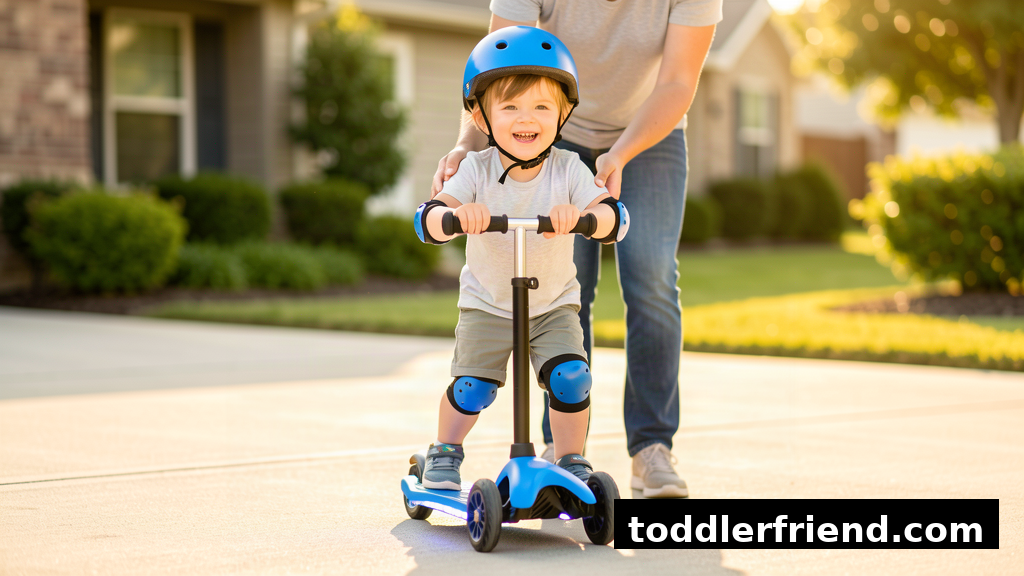
- Wheel count and deck height. A three-wheel scooter with two wheels in front and one in back stays upright when a toddler steps on slowly. The deck on a toddler model sits about 4 to 6 inches off the ground, roughly half the height of a teen scooter, so a fall is short and recoverable.
- Speed ceiling. Toddler-appropriate electric scooters cap out around 5 mph. Some models list a “high” mode near 8 to 10 mph, which is fine for a 7 year old and too fast for a 3 year old still learning to steer.
- Power delivery. A smooth, gradual start matters more than top speed. Look for a thumb throttle with a soft-start ramp rather than a trigger that lurches forward the instant it is pressed.
Weight limits cluster tightly in this segment. The toddler models we reviewed are rated anywhere from 80 pounds up to 132 pounds. A 30-pound 3 year old will not stress an 80-pound limit, but that ceiling tells you how long the scooter will stay useful as the child grows.
Age Limits: What the Ratings Actually Mean
Most powered ride-ons sold in the United States carry a minimum age of 3, and that number is not arbitrary. Motor skills, reaction time, and impulse control all develop sharply between 2 and 4. A 2 year old who can walk confidently may still be unable to steer, brake, and watch for obstacles at the same time.
Practical guidance based on the ratings we saw across retailer listings:
It helps to know who builds what. Razor, Segway, and Hover-1 direct their electric scooter lines at ages 6 and up, so their kid models are not the right starting point for a toddler. Toddler-friendly electric options tend to come from brands like IRIMMY and Elecorange, which build three-wheel models with 5 mph caps, while Little Tikes and Radio Flyer dominate the unpowered push and kick scooters for the 1 to 4 set.
- Under 3: Skip powered scooters entirely. A four-wheel push ride-on or a balance bike is the better tool for building coordination.
- Ages 3 to 4: Three-wheel electric scooters with a 5 mph cap and adult supervision on flat, closed surfaces.
- Ages 5 and up: Two-wheel or taller three-wheel models with an 8 to 10 mph mode become reasonable, still with a helmet.
One more number worth knowing: children under 5 account for a meaningful share of scooter-related emergency room visits each year, and the most common injuries are wrist fractures and head injuries from falls, not collisions. That is why the helmet conversation is not optional. If you want context on how this category fits alongside other motorized toys, our breakdown of electric cars for kids covers the same age and speed trade-offs.
Speed, Battery, and Weight: The Numbers That Matter
Scooter spec sheets are cluttered with marketing figures. These are the ones that change the ownership experience.
| Spec | Toddler range | Why it matters |
|---|---|---|
| Top speed | 5 mph (some 8 mph “grown-up” modes) | 5 mph is roughly a brisk adult walk. A 3 year old can usually handle it on smooth pavement. |
| Motor | 80W to 150W | Lower wattage with soft start beats headline power for beginners. |
| Battery and run time | 12V to 24V, 40 to 70 minutes | Most toddler rides last 20 to 30 minutes, so a 40-minute runtime is plenty. |
| Range | 1.8 to 5.6 miles | Real-world range is usually 60 to 70 percent of the claim on hills and grass. |
| Weight limit | 80 to 132 lbs | Determines how many years you get before outgrowing it. |
| Deck height | 4 to 6 inches | Lower deck means a shorter fall and easier mounting. |
Price bands line up with capability. Basic three-wheel kick scooters run $40 to $60. Electric kids scooters with a motor and battery mostly land between $90 and $180, and among the scooter listings we sampled on Amazon, that $100 to $200 range holds the largest share of products at roughly 21 percent. About 57 percent of those listings carry a customer rating between 4.3 and 4.7 stars, so a 4.3 rating is genuinely average in this category rather than a warning sign.
Safety Certification Is the Shortlist Filter
Any electric scooter you consider for a toddler should carry UL 2272 certification for the electrical drive system and UL 2271 for the battery pack. These standards cover overheating, short circuits, and charger faults, which are the failure modes behind most reported fires from cheap e-mobility devices. Segway’s C2 line, for example, is certified to both UL 2272 and UL 2271, and that is the kind of label worth paying a small premium for.
Beyond certification, run through these five checks before adding to cart:
- CPSC-certified helmet in the correct size. A helmet that slides off offers no protection.
- Working rear brake plus a foot brake on the deck for a second stopping option.
- Soft-start throttle so the scooter does not jump when pressed.
- Non-slip, wide deck with a textured surface for grip in shoes and bare feet.
- Enclosed battery compartment that a curious toddler cannot open with fingers or a toy.
Our kids electric car safety guide covers the same checklist applied to sit-in vehicles, including charger handling and battery storage habits that extend pack life.
Our Pick for the Toddler Window
For a first powered scooter, the strongest fit in the current lineup is a three-wheel electric scooter rated for ages 3 and up, with a 150W motor, a 5 mph safe-speed cap, and three adjustable handlebar heights. The three-wheel layout holds itself upright, the thumb throttle ramps up gradually rather than snapping forward, and the adjustable handlebar means the same unit can serve a 3 year old and still fit at 6 or 7.
The foldable frame and 5 mph cap keep it in the toddler-safe zone, while the LCD screen, Bluetooth music, and light-up deck and wheels give it enough appeal to stay interesting as the child grows. You can see the current price and color options here: 3 Wheel Electric Scooter for Kids Ages 3-12.
If you would rather stay in the $40 to $60 range and postpone the motor, a three-wheel kick scooter with a removable seat is an excellent half-step. It builds the same steering and balance skills with no battery, no charging, and no speed to manage. Browse more options in our riding toys section.
How to Choose and Set Up a Ride-On Electric Scooter for a Toddler
- Confirm the age and weight rating. Look for a minimum age of 3 and a weight limit at least 20 pounds above your child’s current weight so the scooter lasts more than one season.
- Check for UL 2272 and UL 2271. If the listing does not state the certification, treat it as unverified and keep looking.
- Set the speed mode before the first ride. Charge fully, then leave the scooter in its lowest mode, typically 5 mph, for at least the first month.
- Fit the helmet first, then the scooter. The helmet should sit level, cover the top of the forehead, and stay put when the child nods.
- Choose a smooth, flat, car-free surface. Driveways, empty tennis courts, and paved paths are ideal. Avoid grass, gravel, and slopes until steering is solid.
- Inspect the charge and brakes before every session. Squeeze the brake at a standstill, confirm the throttle returns to zero on its own, and check the tire pressure on air-filled models.
Keeping It Running
An electric scooter for a small child lives a short, hard life, so maintenance is mostly about the battery. Charge it after each use rather than letting it sit depleted, store it indoors in a dry spot, and avoid leaving it plugged in for days at a time. Expect a lithium pack in this price range to hold useful capacity for roughly 300 to 500 charge cycles, which for a toddler rider works out to about two to three years of regular play. Wipe the deck and wipe the wheels dry after wet pavement, and check the handlebar clamp and wheel bolts every few weeks, since vibration loosens fasteners on inexpensive scooters.
One final framing note: a ride-on electric scooter is a supervised outdoor toy, not a transportation device, and it should never be treated as a substitute for a helmet or for an adult standing within arm’s reach. Treated that way, it is one of the better tools available for building balance, steering, and confidence at an age when both are forming quickly.
{ “@context”: “https://schema.org”, “@type”: “HowTo”, “name”: “How to Choose and Set Up a Ride-On Electric Scooter for a Toddler”, “description”: “A step-by-step guide to selecting, sizing, and safely setting up a ride-on electric scooter for a child ages 3 to 5.”, “totalTime”: “PT30M”, “step”: [ { “@type”: “HowToStep”, “position”: 1, “name”: “Confirm the age and weight rating”, “text”: “Look for a minimum age of 3 and a weight limit at least 20 pounds above your child’s current weight so the scooter lasts more than one season.” }, { “@type”: “HowToStep”, “position”: 2, “name”: “Check for UL 2272 and UL 2271 certification”, “text”: “Confirm the listing states UL 2272 for the electrical drive system and UL 2271 for the battery pack. If the certification is not stated, treat it as unverified.” }, { “@type”: “HowToStep”, “position”: 3, “name”: “Set the speed mode before the first ride”, “text”: “Charge the scooter fully, then leave it in its lowest speed mode, typically 5 mph, for at least the first month of riding.” }, { “@type”: “HowToStep”, “position”: 4, “name”: “Fit the helmet before the scooter”, “text”: “Choose a CPSC-certified helmet that sits level, covers the top of the forehead, and stays in place when the child nods.” }, { “@type”: “HowToStep”, “position”: 5, “name”: “Pick a smooth, flat, car-free surface”, “text”: “Start on driveways, empty courts, or paved paths. Avoid grass, gravel, and slopes until the child can steer and brake confidently.” }, { “@type”: “HowToStep”, “position”: 6, “name”: “Inspect charge and brakes before every session”, “text”: “Squeeze the brake at a standstill, confirm the throttle returns to zero on its own, and check tire pressure on air-filled models.” } ] }