

Guide
Bumper Car Ride On Toys for Toddlers: A Parent’s Safety and Buying Guide
Aug
Bumper Car Ride On Toys for Toddlers: A Parent’s Safety and Buying Guide
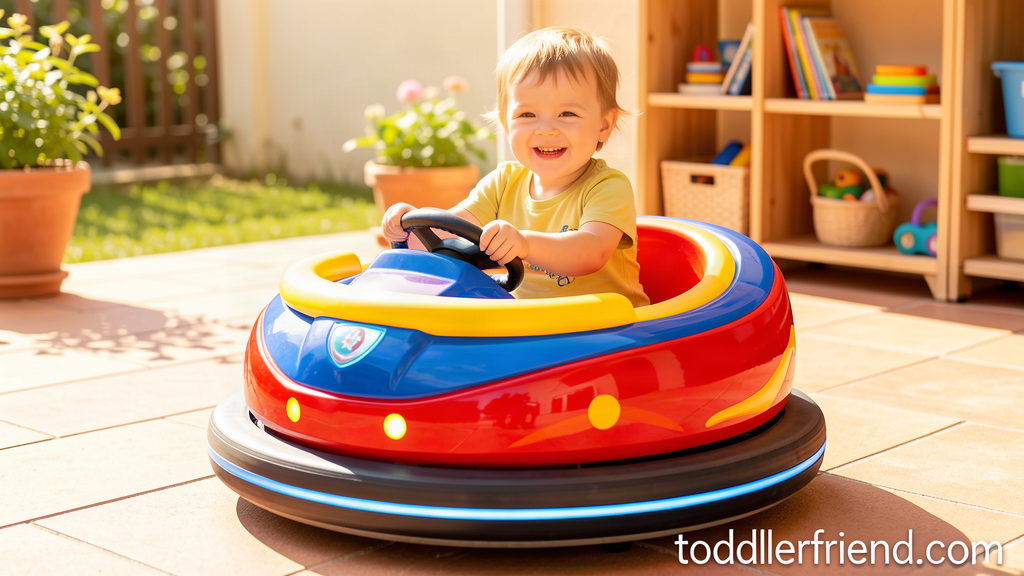
A bumper car ride on toy is a low, round, battery-powered vehicle built for toddlers ages 1 to 4. A soft bumper ring absorbs gentle collisions, the car spins 360 degrees, and speeds stay between 1.5 and 3 mph. Most models include a parental remote so an adult can steer or stop the car.
My daughter got her first bumper car ride on toy the summer she turned two, and I’ll be straight with you: I expected a toy that would last a week. Two years later it is still the first thing she reaches for, and I have now helped four other parents pick one, which is exactly why I wrote this guide. If you are comparing bumper car ride on toys for your own toddler, here is what actually matters, what does not, and which features are worth paying for.
Why a bumper car ride on toy is different from a regular ride on car
The round body and soft bumper ring change how the toy handles. A square ride on jeep or truck has corners that hit walls and furniture hard, and a toddler who misjudges a turn takes the full force of the plastic. A bumper car ride on toy is designed to bounce. The ring compresses on impact, the car rebounds, and the child giggles instead of crying. That design difference is the whole reason parents choose this category.
There is a developmental angle too. Steering a bumper car teaches cause and effect in a way few toys can match: push the wheel left, the car turns left; tap the wall, the car bounces back. Toddlers learn spatial awareness, hand eye coordination, and gross motor control while they think they are just playing bumper cars. Pediatric occupational therapists often recommend ride on toys for this exact reason, and the bumper car format adds the forgiving collisions that make practice feel like play.
The two main types of bumper car ride on toys
Electric bumper cars
These are the most common. A 6V or 12V battery powers the wheels, and the car moves on its own at speeds between 1.5 and 3 mph. Expect battery life in the 45 to 90 minute range per charge, with 8 to 12 hours needed for a full charge. Weight capacities run from 50 to 75 pounds, which covers most toddlers through age 4 or 5. The best models add a parental remote control with start, stop, and steering override, so you can rescue a child who has backed into a corner.
Push and foot-powered bumper cars
For younger toddlers or families who want zero charging drama, push bumper cars work without batteries. The child sits inside and scoots with feet, or a parent pushes from behind. These are lighter, cheaper (usually $40 to $80), and totally silent, which makes them great for indoor play. The tradeoff is speed and independence: a push car never drives itself, so the thrill factor is lower for an older toddler.
Safety checklist: what to verify before you buy
Safety is the reason most parents hesitate, and it should be. Run through these points on any model you consider.
- Speed and voltage. For ages 1 to 3, a 6V car around 1.5 to 2 mph is plenty. Save 12V cars (2.5 to 3 mph) for age 3 and up. Faster is not better for a toddler; it just means harder impacts.
- Parental remote control. This is the single most useful safety feature. You want a remote that can stop the car instantly and override steering, not just turn it on and off.
- Soft bumper ring. The ring should be thick, flexible foam or inflated rubber that runs the full circumference. Check that it stays attached under normal bumps.
- Non-toxic materials. Look for BPA-free, phthalate-free plastic and non-toxic paint. Toddlers mouth everything, including steering wheels.
- Age and weight limits. Respect them. A car rated for ages 1 to 3 with a 50 pound limit is not safe for a 4 year old who weighs 55 pounds.
- Battery safety. Charge only with the included charger, supervise charging, and never charge overnight unattended. This is the one area where budget brands cut corners.
Also decide where the car will live. Electric bumper cars work on smooth indoor floors, patios, and driveways, but struggle on grass and gravel. If you only have a yard, consider whether a push car or a different ride on category fits better. For a deeper look at outdoor safety and supervision, our kids electric car safety guide covers battery care and crash prevention in detail.
Features worth paying for
Prices for bumper car ride on toys run from about $80 for basic 6V models to $250 for premium 12V cars with extras. Here is where your money actually goes.
- Battery life. A 6V car with a 6Ah battery runs roughly 45 to 60 minutes. Stepping to a 12V 7Ah setup pushes run time toward 90 minutes. If you have two kids or long play sessions, pay for the bigger battery.
- Two speed settings. A low gear for beginners and a higher gear for confident riders extends the toy’s useful life by a year or more.
- LED lights and sound. Kids love them and they help with visibility at dusk, but they drain the battery. Treat them as a bonus, not a deciding factor.
- Seat belt or harness. A simple lap belt keeps a wiggly toddler centered and prevents leaning out mid-turn. Make sure it is easy for an adult to buckle, because you will do it a hundred times.
- Build quality. Read reviews for complaints about wobbly wheels, cracked bumpers, and dead batteries. Those three failures account for most returns in this category.
How a bumper car compares to other ride on toys
Parents often ask how a bumper car stacks up against the trucks and jeeps they see everywhere. The honest answer: bumper cars win on safety of impact and indoor friendliness, while traditional ride ons win on speed, realism, and off-road capability. A bumper car ride on toy is the better choice for a first ride on in a house with hard floors and narrow doorways. If your toddler already has a traditional electric car from a brand like Costzon or Little Tikes and wants something that handles differently, the 360 degree spin makes the bumper car feel genuinely new. Our complete guide to electric ride on cars breaks down the traditional side of the category if you want to compare both.
Our top pick: Bumper Buddy 12V ride on electric bumper car
After comparing dozens of models, the Bumper Buddy Ride On Electric Bumper Car is the one we recommend most often. It runs on a 12V battery with two speed settings, carries toddlers from about 12 months up to 5 years, and includes a parental remote with full start, stop, and steering override. The soft bumper ring wraps the entire car, and the built-in LED lights make it easy to spot at dusk. It holds a 4.5 star average across hundreds of ratings, and at around $160 it sits in the middle of the price range rather than at the top.
What makes it stand out from cheaper 6V cars is the two speed system. You start your toddler in low gear, roughly 1.5 mph, and switch to high gear, close to 2.5 mph, when they earn it. That single feature stretches the toy’s useful life well past age 3, which most budget cars cannot claim. If you want to see how it compares against other popular models, our best electric bumper cars for toddlers roundup covers the full field.
Battery care and maintenance that actually matter
Most bumper car problems come down to battery abuse, not manufacturing defects. Charge the car fully before first use, unplug it once the light turns green, and avoid letting the battery drain to zero before recharging. Store the car in a dry spot, and wipe down the bumper ring and wheels after outdoor play. With that routine, a decent 12V model should easily last two to three years, which is the full ride on window for most families.
One maintenance trap: leaving the car plugged in for days. Trickle chargers on budget cars can overheat the battery. Set a reminder, charge during the day when you are around, and unplug when done. If the car starts losing range noticeably, replace the battery before considering the toy broken; replacement batteries for most models cost $25 to $45.
Frequently asked questions
What age is a bumper car ride on toy suitable for?
Most manufacturers rate bumper cars for ages 1 to 4 or 1 to 5. A 6V model suits a child from 12 months with supervision, while a 12V two speed car fits from about 18 months up to age 5. Always check the specific weight limit, typically 50 to 75 pounds, and follow it.
How fast do toddler bumper cars go?
6V models run about 1.5 to 2 mph, and 12V models run 2.5 to 3 mph. That is walking speed, which is intentional: the point is safe bumping, not racing. Two speed cars let you keep a beginner in low gear and move up later.
Can bumper cars be used on grass?
Generally no. The small wheels and low clearance are built for smooth surfaces like indoor floors, patios, and driveways. On grass and gravel the car stalls or gets stuck. If your play space is mostly yard, look at a push bumper car or a traditional ride on with larger wheels.
Are bumper car ride on toys safe for 2 year olds?
Yes, with the right model and supervision. Choose a 6V or low speed setting, confirm the weight limit covers your child, and always use the parental remote for the first weeks. The soft bumper ring is specifically designed to make collisions gentle, which is why pediatricians and occupational therapists generally view this category favorably.
Final thoughts
A bumper car ride on toy is one of those rare purchases that earns its place in a playroom. It delivers the independence toddlers crave, the forgiving collisions parents need, and enough skill building to justify the price tag. Start with a 6V model or a two speed 12V like the Bumper Buddy, verify the safety checklist, and supervise the first few sessions. You will probably end up with the toy your toddler asks for every single day, and that is the best review there is. Browse our full riding toys collection if you want to explore other options before you decide.
