

Guide
Kids Toys Motorcycle: A Parent Guide to Safe and Fun Ride-Ons for Toddlers
Aug
Kids Toys Motorcycle: A Parent Guide to Safe and Fun Ride-Ons for Toddlers
A kids toys motorcycle is a battery-powered ride-on vehicle built for children ages 1 to 6, styled like a real motorcycle but sized for small riders. These toys run on 6V or 12V batteries, reach top speeds of 2 to 5 miles per hour, and use three wheels or training wheels to keep wobbly riders upright.
There is something about a motorcycle that makes toddlers stop and stare. The glossy body, the working headlight, the little engine hum. A kids toys motorcycle gives a young rider that same thrill without any of the danger of a real bike. For parents, the appeal is practical too. These ride-ons build gross motor skills, teach cause and effect, and burn off the energy that otherwise ends up on the living room furniture.
This guide covers what to look for, how 6V and 12V models compare, and which features actually matter for a child ages 1 to 4. We also picked one standout model that most families will be happy with, plus a few alternates for different ages and budgets.
Why Toddlers Love Motorcycle Toys
Ride-on toys earn their keep for a handful of developmental reasons, and motorcycles in particular pull double duty. First, they strengthen gross motor skills. Steering, balancing, and climbing on and off the seat work the same muscle groups that help with walking, running, and later bike riding.
Second, they introduce cause and effect in a way a tablet never can. Press the foot pedal, the bike moves. Twist the throttle, the engine sound gets louder. For a 2-year-old figuring out how the world responds to their actions, that feedback loop is gold.
Third, they get kids outside. Pediatric occupational therapists often recommend 60 minutes of active play a day for toddlers, and a ride-on motorcycle makes outdoor time feel like a treat instead of a chore. Most parents report their child will circle the driveway for a full battery charge before asking to go inside.
Safety First: What Every Parent Should Check
Motorcycle toys are not real motorcycles, but they still deserve a careful once-over before purchase. Here is the checklist we use when reviewing any ride-on for this site.
- Age and weight limits. Most 6V models suit children ages 1 to 3 and hold riders up to 55 pounds. Most 12V models suit ages 3 to 6 and hold up to 88 pounds. Match the limit to your child, not to how fast you want them to go.
- Speed. Beginner models top out around 2.5 mph, which is slower than a brisk walk. Bigger 12V bikes reach 3 to 5 mph. For a first ride-on, slower is genuinely better.
- Stability. Look for three wheels, wide rear wheels, or removable training wheels. A low seat height, usually 10 to 14 inches off the ground, also makes it easier for small legs to reach the pedals.
- Materials. Insist on non-toxic, BPA-free plastic with no sharp edges and no small parts that can pop off. Check that the body panels are securely fastened before every ride.
- Certifications. Reputable brands sell models tested to ASTM F963, the standard consumer safety specification for toy safety in the United States. CPSC compliance should be listed on the listing page or box.
- Parent controls. Many 12V models include a remote control that lets an adult start, stop, and steer the motorcycle from a distance. On windy driveways and near driveways, that feature is worth real money.
One more rule that does not get said enough: supervise every ride until your child has proven they can handle the machine, and consider a well-fitted toddler helmet even at 2.5 mph. Falls happen, and the helmet is cheaper than the alternative.
6V vs 12V vs 24V: Which Battery Size Is Right
Battery voltage is the single biggest decision in this category. It drives price, speed, and the age range the toy suits. Here is how the three sizes shake out.
| Battery | Best Age | Top Speed | Run Time | Typical Price |
|---|---|---|---|---|
| 6V | 1 to 3 years | 2 to 2.5 mph | 30 to 45 minutes | $60 to $130 |
| 12V | 3 to 6 years | 3 to 5 mph | 1 to 2 hours | $120 to $250 |
| 24V | 6 years and up | 5 to 7 mph | 1 to 2 hours | $250 to $450 |
For a toddler between 1 and 3, a 6V model is the right starting point. It is slow, light, and forgiving. For a child closer to 3 or 4 who has already mastered a smaller ride-on, a 12V motorcycle with a parent remote is a better long-term buy because it grows with them. Skip 24V entirely for this age group; it is too fast and too heavy for small riders.
Our Top Pick: Licensed BMW 12V Kids Motorcycle
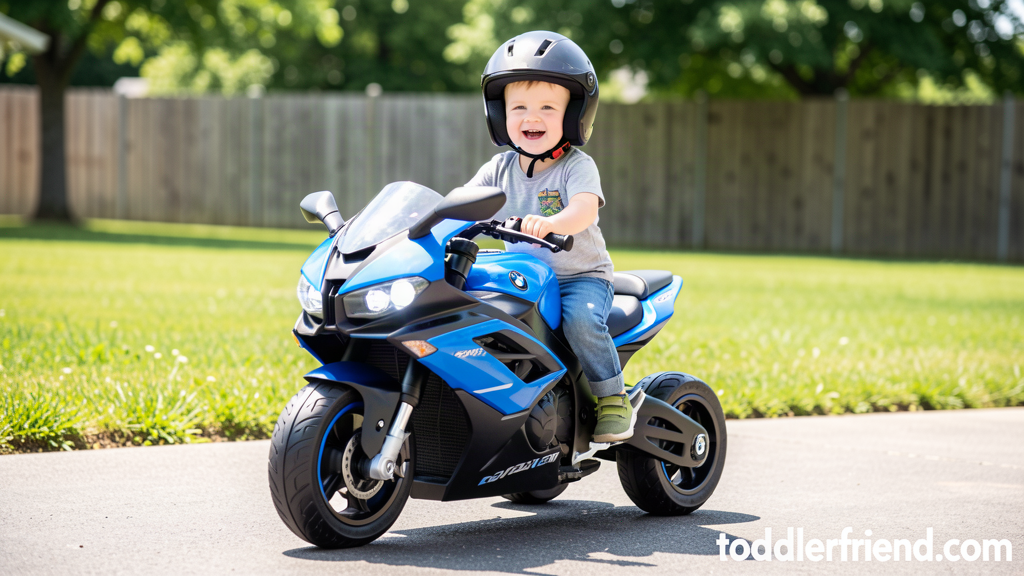
After looking at dozens of listings, the model we keep recommending to parents of 3 to 5 year olds is the Kiddokidz Licensed BMW 12V Kids Motorcycle. It earns a 4.2 out of 5 stars across more than 1,600 customer ratings, and the price typically lands around $127.
The BMW styling is the hook, sure, but the substance is underneath. It uses a three-wheel design, so a preschooler does not need balancing skills to enjoy it. It offers two speed settings, a working LED headlight, a horn, and built-in music. The realistic body panels are made from sturdy, non-toxic plastic, and the seat sits low enough that a 3-year-old can get on and off without help.
The biggest practical plus is the parental remote. You can start the motorcycle, stop it, and steer it from up to about 30 feet away, which means you can let your child feel independent while still holding the real controls. If your child is between 3 and 5 and this is their first motorcycle, this is the one we would buy.
Check the current price of the Kiddokidz BMW 12V Kids Motorcycle on Amazon
Alternates Worth Considering
- Costzon 6V Chopper: A smaller, cheaper chopper-style bike for ages 1 to 3. Slower speeds and a lower seat make it a gentle first ride-on, usually priced between $80 and $110.
- Aosom 12V Motorcycle: A solid 12V option with treaded tires and a 5 mph top speed. Good for kids who already have some ride-on experience, around $120 to $150.
- TOBBI 12V Dirt Bike: A licensed motocross-style bike for kids 3 to 6 who prefer the dirt-bike look. Expect a 2-speed gearbox and working suspension at roughly $160.
How to Choose the Right Kids Motorcycle
If you are standing in front of a wall of ride-ons feeling overwhelmed, work through these five steps in order. They will narrow the field fast.
- Match the battery to the age. Under 3, buy 6V. Age 3 to 5, buy 12V with a remote. Over 5, consider a larger 12V or 24V model.
- Check the weight limit against your child. Leave at least 10 pounds of headroom so the motor is not straining on every ride.
- Look for three wheels or training wheels. Stability beats style for this age group every time.
- Confirm safety certifications. The listing should reference ASTM F963 or CPSC compliance, and the plastic should be non-toxic and BPA-free.
- Read the battery and charging details. A full charge takes 8 to 12 hours for most models, and run time is typically 40 minutes to 2 hours. Pick a model you can charge overnight without a headache.
Frequently Asked Questions
What age is a kids toys motorcycle good for?
Most ride-on motorcycles suit children ages 1 to 6. Six-volt models are designed for ages 1 to 3, while 12V models fit ages 3 to 6. Always check the manufacturer’s age recommendation for the specific model.
How fast do kids motorcycle toys go?
Beginner 6V models top out around 2 to 2.5 mph, slower than a brisk walk. Twelve-volt models reach 3 to 5 mph. Some larger 24V bikes exceed 5 mph, but they are not appropriate for toddlers.
Do toddlers need a helmet on a ride-on motorcycle?
Not required by law in most states, but recommended. A lightweight toddler bike helmet costs $20 to $40 and protects against the falls that happen when kids tip over at low speed or bump into a curb.
How long does the battery last on a kids motorcycle?
Most models run 40 minutes to 2 hours per charge, depending on voltage, rider weight, and terrain. A full recharge takes 8 to 12 hours, and most manufacturers recommend charging after every use.
The Bottom Line
A kids toys motorcycle is one of the few toys that delivers on the fantasy and the developmental payoff at the same time. Start with a 6V model for a 1 to 3 year old, move up to a 12V model with a parent remote around age 3, and always weigh the speed and weight limits against your own child before you click buy.
For more ride-on inspiration, see our guide to the best motorcycle ride-on toys for toddlers, our complete guide to electric ride-on cars, and our roundup of four-wheel ride-on toys for younger toddlers. If your child is not ready for a motor yet, our balance bike guide covers the pedal-free starting point.
