

Guide
Best Childrens Desk and Chairs Sets for Toddlers: A Safety and Buying Guide
Sep
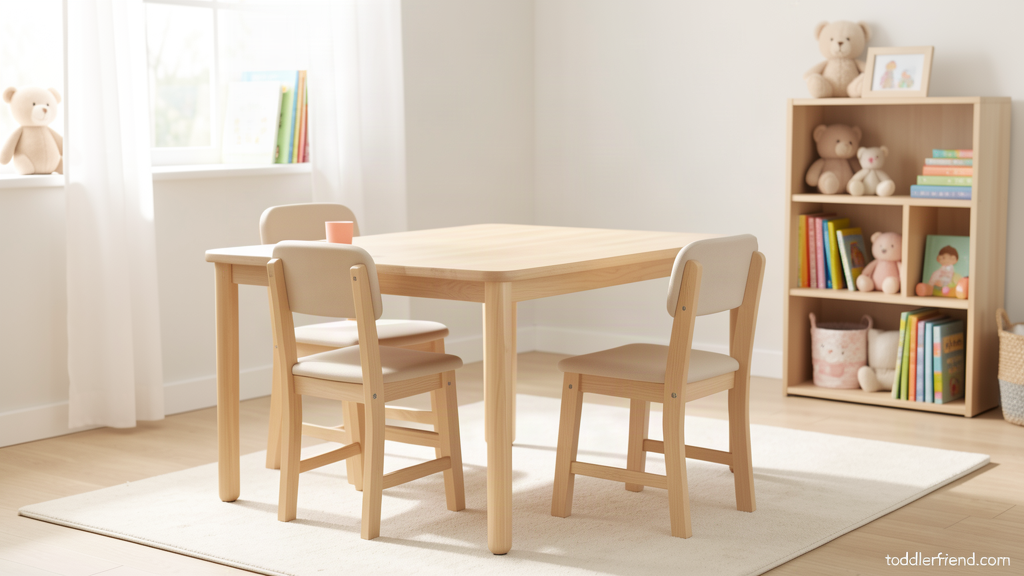
A childrens desk and chairs set is child-sized study furniture, usually a low writing surface paired with one or two matching chairs, built for kids roughly ages 2 to 6. Seat heights around 10 to 15 inches let small feet rest flat on the floor, which supports better posture during drawing, reading, and early homework.
Somewhere between the playroom phase and real homework, most kids hit a moment when the kitchen table stops working. They sprawl. They kneel. They drape themselves over the counter while every crayon rolls onto the floor. A desk and chairs set sized to their body fixes most of that, and it does something quieter too: it gives a toddler a space that is actually theirs.
I have spent years reviewing toddler furniture and talking with parents who bought the wrong thing first. The most common mistake is treating a desk like a scaled-down adult desk. Height, weight limits, and materials matter far more than looks, because a set that wobbles or sits too high will get ignored, climbed on, or both. This guide covers what to measure, what to check, and which features are worth real money.
Why a Desk and Chair Set Earns Its Spot
Occupational therapists keep recommending child-sized furniture for a reason that has nothing to do with cuteness. When a toddler sits at a desk where both feet touch the floor and elbows rest near a right angle, the body does not have to fight to stay balanced. That frees attention for the actual task, whether it is coloring, tracing letters, or stacking blocks into a tower that must not be touched.
There is a developmental payoff too. Around age 2, children start wanting to do things “by myself.” A personal desk turns that impulse into a routine: get the paper, sit down, work, put supplies away. Many Montessori-style homes use a low table and chair for exactly this reason, and the same logic applies to a dedicated desk and chairs set.
By ages 3 to 5, the desk becomes a practice ground for school habits. Kids who regularly sit at their own desk tend to build longer focus during table activities, and they learn to manage their own supplies. If your child is not quite ready for a desk, a toddler table and chair set serves the same purpose for play and snacks, and many families start there before moving to a taller desk.
The Safety Checklist: Check These Before You Buy
Every desk set for this age group should pass a short list of checks before it enters your home. Run through these with the product page open, and again when the box arrives.
Age range and weight limits
Ignore any listing that does not state an age range and per-seat weight limit. Most toddler chairs are rated for 40 to 75 pounds per seat, and the desk or table itself usually carries a higher total rating. If a set says ages 3 and up and your child is 18 months, do not stretch the label. A child who cannot get in and out of the chair on their own is too small for the set.
Rounded corners and a stable base
Toddlers fall sideways, backwards, and off things they had no business climbing. Run your hand along every edge before you commit, and choose rounded corners over sharp ones. Then look at the base: the legs should be wide enough that the set does not rock when a child leans on the desk edge, and fixed legs beat folding ones for daily use.
Materials and finishes
Anything a toddler mouths, chews, or drags crayons across needs a finish that is not toxic. Look for water-based, lead-free paints and finishes, and confirm the product meets CPSIA limits on lead and phthalates. Solid wood is the easiest to vouch for. Painted MDF and particle board are fine when the edges are sealed, but cheap unsealed MDF can swell and splinter within a year. Plastic sets should be labeled BPA-free and phthalate-free.
Certifications worth knowing
Two labels actually mean something here. Greenguard Gold certifies that a product meets strict limits on chemical emissions, which matters in a bedroom where a child spends hours. JPMA certification means the manufacturer submitted the product to third-party safety testing under the Juvenile Products Manufacturers Association program. Delta Children, one of the biggest names in affordable kids furniture, builds many of its desks to those standards and sells most of them between $35 and $60.
Wood, Plastic, or Painted MDF
There is no single best material, only trade-offs, and your budget will make the decision for you.
Plastic sets win on cleanup and weight. Spilled paint wipes off, the set is light enough for a parent to move, and prices start around $35 to $50. The downside is stability: very light plastic sets slide on hardwood floors and can tip if a child pulls up on the desk edge.
Painted MDF and engineered wood dominate the mid-range, usually $55 to $110. These look like real furniture in a room, hold up to normal use, and are what most adjustable sets use. The catch is that chipped edges expose raw board, so sealed edges and a good paint layer matter.
Solid wood sets cost the most, roughly $100 to $250 from brands like KidKraft and Delta Children, and they last longest. A solid wood desk can survive two or three children and still look fine at a garage sale. They are heavier, slower to assemble, and usually need a quick wipe with a damp cloth rather than a hose-down.
Sizing: Match the Set to Your Toddler
Measure the child, not the room, at least for the seat. Have your toddler stand against a wall and measure from the floor to the back of their knee. That number is your target seat height, give or take an inch. A seat that is too high leaves feet dangling, which is the main reason kids slump and quit. A seat an inch or two low is tolerable; one that is too high is not.
Use these ranges as a starting point:
- Ages 2 to 3: seat height around 10 to 12 inches, desk surface 16 to 20 inches.
- Ages 3 to 5: seat height 12 to 14 inches, desk surface 20 to 24 inches.
- Ages 5 to 6: seat height 14 to 16 inches, desk surface 24 to 26 inches.
Give each child at least 24 inches of width along the desk so elbows do not collide. A set shared by two kids needs a surface around 30 by 20 inches minimum. If your toddler already has a favorite play surface, our roundup of the best activity tables for toddlers explains how those compare to desks before you double up on furniture.
Top Picks for Toddler Rooms
Two setups cover most families, and both are current best sellers on Amazon with real third-party reviews behind them.
For the classic desk and chairs set with room to grow, the Brelley adjustable toddler table and chair set is the strongest value right now. The tabletop measures 31.5 by 23.6 inches, the legs adjust to several heights, and the table itself is rated to support up to 300 pounds, which tells you the frame is not going to flex under a climbing 3-year-old. It lists for $99.99 and typically sells around $69.96, and it is one of the top-rated adjustable sets on Amazon for ages 3 to 8.
For small rooms and tight budgets, the Delta Children MySize chair desk with storage bin is a different shape of smart. It is a one-piece chair and desk combo with a low height that toddlers and preschoolers can get in and out of by themselves, plus a removable cup holder and a fabric storage bin underneath for crayons and books. It sells for about $40, comes in several colors, and takes up barely more floor space than a single chair.
If you want a wooden set that will last through preschool, plan on $100 to $250 and look for solid wood legs, sealed edges, and rounded corners. Whatever you choose, browse our full baby and toddler furniture collection to compare tables, chairs, and desks side by side.
Setting Up the Desk Safely
Assembly is where cheap sets fail. Follow the torque and order in the manual instead of guessing, then tighten every bolt again after the first week, because wood and MDF compress as they settle. Check legs monthly for wobble and screws for backing out.
Place the set on a level floor away from windows, cords, and anything a child could pull down from above. Most low toddler desks do not need wall anchoring, but if the set is tall enough for a child to climb onto the surface, anchor it to the wall following the CPSC Anchor It guidance. Add rubber or felt pads under the legs so the set does not slide during use.
Finally, do a first-use walkthrough with your child. Show them how to sit, where supplies live, and what happens if they stand on the chair. Kids under 4 should have a parent nearby during desk time, especially in the first few weeks.
Common Questions Parents Ask
What age is a childrens desk and chairs set made for?
Most sets target ages 2 to 6, but the real test is height. If the seat lets your child’s feet rest flat with knees at a comfortable bend, the set fits, regardless of the number on the box. A set that is too big will not be used safely.
How much should I spend on a desk and chair set?
Basic plastic and one-piece chair desks run $35 to $50. Adjustable table and chair sets with better frames run $55 to $110. Solid wood sets run $100 to $250 and last through several children. There is little reason to spend above that for toddler ages.
Are adjustable height desk sets worth it?
Yes, if you want one purchase to last from preschool through early elementary. Adjustment ranges vary, so check the lowest seat height against your child’s current measurement rather than assuming a tall toddler will fit a set labeled for ages 3 and up.
Final Thoughts
The right desk and chairs set comes down to three numbers: a seat height that matches your child’s legs today, a weight limit that survives climbing, and a footprint your room can fit without becoming a tripping hazard. Everything else, from cup holders to character prints, is negotiable.
Start with the size your toddler needs right now, put it on a level floor, and tighten the hardware on a schedule. A simple, stable desk that gets used daily beats a fancy one that wobbles, because a toddler who feels safe at their desk will keep coming back to it.
