

Guide
Best Swing Set for Backyard: A Toddler Safety and Buying Guide
Aug
Best Swing Set for Backyard: A Toddler Safety and Buying Guide
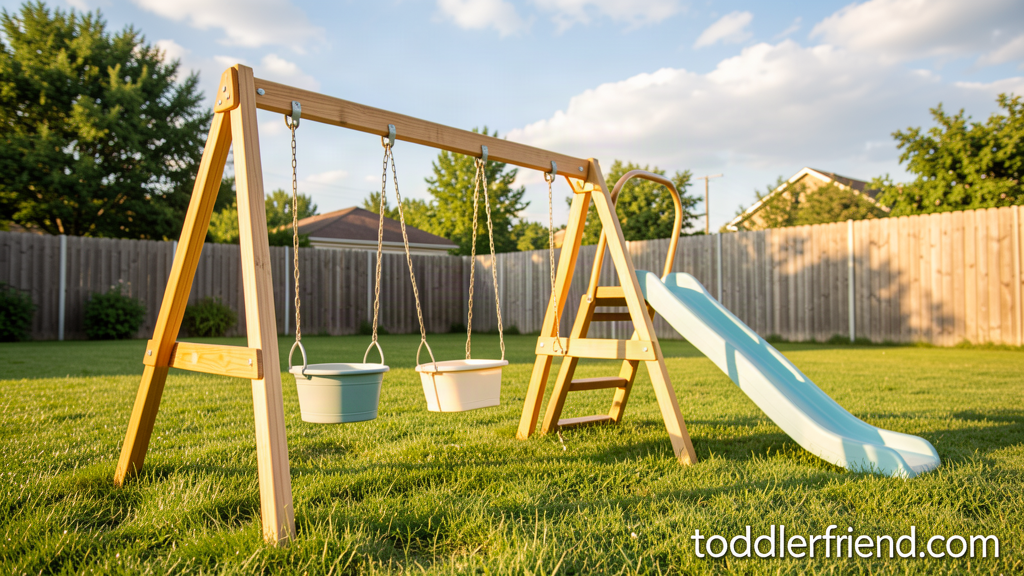
A backyard swing set is an outdoor play structure built for home use, usually made of wood, metal, or molded plastic, with swings, slides, or climbing features sized for children. The safest options for toddlers keep seats low to the ground, use bucket seats with safety harnesses, and meet ASTM F1148 home playground equipment standards.
If you have a toddler who would rather climb the couch than sit on it, a swing set in the backyard can change your afternoons. Swinging builds balance, core strength, and coordination while giving kids a safe way to burn the energy that otherwise shows up as chaos at dinner time. But toddler gear is a different beast from the playground equipment you remember from your own childhood, and the differences matter.
I have spent years reviewing toddler products and talking to parents who made expensive mistakes with backyard equipment. The biggest one is buying a set sized for a 7-year-old and expecting a 2-year-old to use it safely. This guide covers what actually matters when you shop, what to check before your child swings, and which features are worth paying for.
Why a Backyard Swing Set Earns Its Spot
Pediatricians and child development specialists point to swinging as one of the best whole-body activities for young children. The motion stimulates the vestibular system, which governs balance and spatial awareness, and that stimulation carries over into everything from walking on curbs to sitting still at story time.
A 2022 survey by the International Play Equipment Manufacturers Association found that parents ranked outdoor play equipment among the top three purchases for encouraging physical activity in kids under 6. Swinging for 15 minutes a day also gives toddlers a predictable sensory routine, which many parents report helps with sleep and mood regulation.
Beyond the physical benefits, a swing set gives you a reason to be outside together. The backyard becomes the destination instead of the tablet, and that trade is worth most of the price tags in this category. If your toddler already loves bouncing, our roundup of outdoor toddler trampolines covers another great way to build the same skills.
What to Look for in a Swing Set for Your Backyard
Before you compare brands, set your requirements. Four specifications matter more than everything else combined.
Age range and weight limits
A toddler swing should list an explicit age range and per-seat weight limit. Bucket seats typically support 40 to 50 pounds and fit children roughly ages 1 to 3. Full bucket seats with a three-point harness are the right call for kids under 2. Belt seats, the flat rubber or plastic kind, are for children who can pump independently, usually age 4 and up.
Seat height
For toddlers, the seat should sit low enough that a child can get on and off with minimal help, usually 12 to 16 inches off the ground. A set that forces a toddler to be lifted into the swing every single time will collect dust by August.
Frame material
You have three real choices. Molded plastic sets from brands like Little Tikes and Step2 cost $200 to $400, resist rot, and stay cool in direct sun, but they feel light and can wobble if not anchored. Galvanized steel frames, common on sets like the Costzon 4-in-1, cost $200 to $500 and hold up well, but check that all bolts are covered or rounded. Cedar and pressure-treated pine sets from Gorilla Playsets and Backyard Discovery run $400 to $1,200 and look beautiful, but they need annual sealing in wet climates.
Anchoring system
This is the spec most parents skip and the one that matters most. Every freestanding swing set needs ground anchors, auger stakes, or concrete footings. A set that weighs 70 pounds can tip with a wiggly toddler on it, and the manufacturer instructions will spell out the anchoring method for your yard type.
Wood vs Metal vs Plastic: Which Frame Wins
There is no universal winner, only a best fit for your yard and budget.
Plastic sets win on maintenance. They never splinter, never rust, and a hose rinses them clean. The trade is stability. Most plastic sets weigh between 60 and 120 pounds, so anchoring is non-negotiable, and the play features are limited to slides, small climbers, and swings.
Metal sets win on strength per dollar. A galvanized steel frame rated for 400 to 800 pounds total will outlast the toddler phase and often the preschool phase too. Look for powder-coated frames, covered bolts, and swing hangers with bearings rather than open hooks.
Wood sets win on longevity and looks. A cedar set with a proper finish can serve two or three children over 10 to 15 years. They are also the heaviest to move and the slowest to assemble, with most full sets taking two adults a full weekend. If you are also weighing slide options for the same space, our Little Tikes vs Step 2 slide comparison explains how the two biggest plastic brands differ.
Sizing the Set to Your Yard
Measure before you shop, not after. A compact toddler swing set needs a footprint of roughly 8 by 10 feet, including clearance. A full playset with a slide needs 12 to 15 feet of width and a 10-foot height clearance for the swing beam.
The CPSC recommends a fall zone of at least 6 feet on all sides of playground equipment, with additional clearance in front of and behind swings equal to twice the swing beam height. That means an 8-foot-tall swing beam needs 16 feet of open space in front and behind. Grass is the bare minimum surface; rubber mulch, pea gravel, or sand at 9 to 12 inches deep is better. Concrete, asphalt, and packed dirt are not acceptable surfaces under toddler swings.
If your yard is small, a standalone toddler swing on a foldable A-frame stand, like the hpyfov 2-in-1 at $79.99, takes up almost no permanent space and stores indoors for winter. Browse our full selection of outdoor play equipment if you want to see more options for small spaces.
Safety Checks Before the First Swing
Run through this list before your child touches the set, then repeat it monthly.
- Confirm the set meets ASTM F1148, the voluntary standard for home playground equipment, and look for the manufacturer age and weight labels.
- Inspect every bolt, hook, and hanger for rust, sharp edges, or gaps that could catch clothing.
- Remove strings, cords, and necklaces before swinging, since drawstrings are a documented strangulation hazard.
- Verify the anchor points are secure by pushing on the frame from several angles.
- Close any exposed S-hooks with pliers or swap in covered hangers.
Supervision is the final layer. A toddler should never swing unattended, even in a bucket seat with a harness. Most swing-related injuries in children under 4 happen during falls, and a parent within arm’s reach prevents most of them.
Installation and Maintenance
Set aside a full day for assembly. Two adults, a drill, and a socket set make the difference between a frustrating afternoon and a straight, stable frame. Follow the torque specs in the manual rather than guessing, because loose bolts are the number one cause of wobbly sets.
For ground prep, level the site and remove sod, then place the set on a 6-inch base of playground mulch or sand that extends through the entire fall zone. If you are installing on grass, mow short and re-level after the first month as the soil settles.
Maintenance is seasonal. In spring, check hardware, wood for splinters or cracks, and metal for rust. In fall, tighten everything and consider a weatherproof cover. Pressure-wash plastic sets twice a year. In snowy climates, most metal and plastic sets can stay up all winter, but wooden sets fare better with a cover or a fresh seal coat.
Top Picks for Toddler Backyards
For a first swing set, the hpyfov 2-in-1 My First Toddler Swing Set stands out for the under-2 crowd. It pairs a soft bucket seat with a safety harness and height adjuster, folds flat for storage, and sells for around $79.99. It is not a playset, but it is a genuinely safe first swing that grows with a child from about 6 months to 4 years.
For families who want a slide plus a baby swing in one unit, the Costzon 4-in-1 metal set adds a canopy, a climbing ladder, and a small deck for about $231.95, with a total frame rating of 550 pounds.
For the classic backyard look, wooden playsets from Gorilla Playsets and Backyard Discovery start around $400 and climb past $1,000 as you add clubhouses and wave slides. Outsunny also makes a compact wooden playset aimed at ages 1.5 to 4 with a baby swing seat and slide, priced around $230.
Common Questions Parents Ask
At what age can a toddler use a backyard swing set?
Most bucket seats fit children from about 6 to 12 months with full harness support, and most manufacturers recommend waiting until a child can sit up unassisted. The typical sweet spot is 18 months to 3 years.
Can I use a swing set on grass?
Yes, but grass is the minimum. A 9 to 12 inch layer of mulch or sand under and around the set is safer and cushions falls far better than turf.
How long does a swing set last?
Plastic sets last 5 to 8 years outdoors. Galvanized steel lasts 8 to 12 years with basic care. Cedar wood sets can last 10 to 15 years if sealed every couple of years.
Do I need to anchor a toddler swing set?
Yes. Even lightweight sets tip when a child climbs or leans, and anchoring is usually required by the manufacturer warranty.
Final Thoughts
The right swing set for your backyard comes down to three things: a seat your toddler can use safely at their age and weight, a frame you are willing to anchor and maintain, and a footprint your yard can actually fit with a proper fall zone. Skip the features your child cannot reach yet. A safe, simple swing that gets used daily beats a fancy playset that sits untouched because the seat is too high or the harness is missing.
Pick the size your toddler needs today, anchor it properly, and check the hardware on a schedule. Do that and the swing set becomes one of the best purchases you will make for outdoor play. Your toddler will not remember the brand, but they will remember the swinging.
{
“@context”: “https://schema.org”,
“@type”: “HowTo”,
“name”: “How to Choose and Set Up a Safe Backyard Swing Set for Toddlers”,
“step”: [
{“@type”: “HowToStep”, “position”: 1, “name”: “Measure your yard and fall zone”, “text”: “Allow at least 6 feet of clearance on all sides of the set, plus 16 feet in front of and behind an 8-foot swing beam. Choose a footprint of 8 by 10 feet for a compact toddler set.”},
{“@type”: “HowToStep”, “position”: 2, “name”: “Pick the right seat for your child’s age”, “text”: “Use a full bucket seat with a three-point harness for children under 2, and a standard bucket seat rated 40 to 50 pounds for ages 1 to 3. Skip belt seats until age 4.”},
{“@type”: “HowToStep”, “position”: 3, “name”: “Choose a frame material that fits your climate”, “text”: “Plastic costs $200 to $400 and needs no sealing. Galvanized steel costs $200 to $500 and resists rust. Cedar or pressure-treated pine costs $400 to $1,200 but needs annual sealing in wet climates.”},
{“@type”: “HowToStep”, “position”: 4, “name”: “Anchor the set before first use”, “text”: “Install ground anchors, auger stakes, or concrete footings exactly as the manual specifies. Push on the frame from several angles to confirm it does not tip.”},
{“@type”: “HowToStep”, “position”: 5, “name”: “Prepare the surface under the set”, “text”: “Level the site and add 9 to 12 inches of rubber mulch, pea gravel, or sand across the full fall zone. Never place toddler swings over concrete, asphalt, or packed dirt.”},
{“@type”: “HowToStep”, “position”: 6, “name”: “Inspect and supervise”, “text”: “Check bolts, hooks, and hangers monthly for rust or sharp edges. Remove drawstrings and necklaces before play, and keep a parent within arm’s reach during every swing session.”}
]
}
