

Guide
Four Wheel Ride On Toys for Toddlers: A Safety and Buying Guide
Sep
Four Wheel Ride On Toys for Toddlers: A Safety and Buying Guide
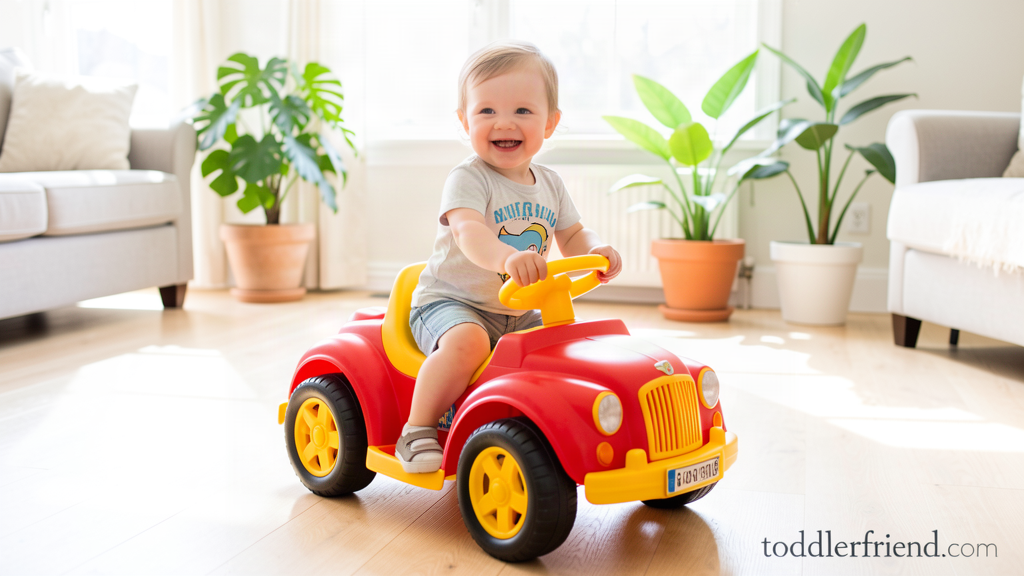
A four wheel ride on toy is a child-sized, foot-powered or battery-powered vehicle with four points of ground contact, built for toddlers roughly 12 months to 5 years old. Because the four-wheel layout spreads your child’s weight across a wider footprint than a tricycle, the toy resists tipping at low speeds and stays stable while a toddler climbs in and out.
Four wheels is the configuration most parents end up choosing, and it is not hard to see why. Two-wheel balance bikes demand coordination a one-year-old does not have yet, and three-wheel trikes can still tip when a child turns hard on a sidewalk. Four wheels sit flat on the ground, which means the fun starts earlier and the worry arrives later.
This guide covers what actually separates a good four wheel ride on toy from a frustrating one: stability numbers, age and weight limits that matter, the safety hardware worth paying for, and how to set the thing up so your toddler’s first rides go well.
What Counts as a Four Wheel Ride On Toy?
The category is broader than most parents expect. Any toddler vehicle with four contact points qualifies, including:
- Foot-to-floor push cars — no motor, no battery. Your child shuffles along with their feet while a parent pushes the rear handle. These are the classic first ride-on, and the Little Tikes Cozy Coupe has been the defining model since 1979.
- Ride-on trucks and wagons — rugged bodies, big EVA or rubber tires, and usually a storage bed or dump function.
- 6V electric four wheelers — slow, light, and cheap, typically starting around $100.
- 12V battery-powered cars and quads — the mainstream choice for ages 2 to 4, generally running $150 to $300.
- 24V two-seat models — bigger frames rated to 110 pounds, usually $300 to $500, and aimed at older toddlers and preschoolers or siblings riding together.
What separates these from a cheap knockoff is not the badge on the hood. It is the wheelbase width, the seat belt, and whether the electronics actually respond the moment you touch the remote.
Why Four Wheels Beat Two or Three for Toddlers
Stability you can measure
A four-wheel frame gives a wider effective base, so the toy resists lateral tipping far better than a trike. When you are comparing models, look at two numbers: the overall width of the vehicle and the height of the seat. A wider body with a low-mounted battery keeps the center of gravity down, which is what actually prevents rollovers when a toddler leans out to grab something.
Gross motor development
Getting in, steering, pushing, and climbing out all build core strength and coordination. A foot-to-floor car teaches the cause-and-effect link between your child’s legs and the vehicle’s movement. A battery-powered version adds steering judgment and spatial awareness, because now the child has to plan a path around the patio furniture.
Independence without full independence
The best four wheel ride on toys for the 18-month to 3-year window include a parental remote with an emergency stop. Your toddler gets the steering wheel and the horn; you keep the ability to kill the throttle when they aim at the driveway.
If you are still deciding between battery chemistries, our breakdown of whether 6V or 12V is better for ride on toys covers runtime, terrain, and price differences in detail. And if your child is truck-obsessed rather than car-obsessed, our roundup of the best ride on trucks for toddlers is a better starting point.
Safety Features Worth Paying For
Safety hardware is where budget models cut corners, so read the spec sheet rather than the product photos.
- Seat belt or harness — a three-point harness, not just a lap belt, for anything that moves under its own power. Non-negotiable above walking pace.
- Parental remote with kill switch — the single most useful safety feature on an electric model. Check the stated range, typically 30 to 50 feet, and read recent reviews about lag.
- Slow-start acceleration — the vehicle ramps up instead of jerking forward. This prevents the startle reaction that makes toddlers lurch and lose their grip.
- Low center of gravity — battery mounted low and centered, wide track, no top-heavy plastic canopies.
- Rounded edges and non-toxic materials — look for BPA-free, phthalate-free plastics and toys that meet ASTM F963 and CPSC standards. Avoid models with exposed pinch points at the wheel wells.
- Adjustable speed settings — start at the lowest setting (1.5 to 2 mph) and step up only as steering improves.
One caution on wording you will see in marketing copy: no ride-on toy is entirely safe on its own. A model that meets CPSC and ASTM F963 standards, used on a flat surface under direct adult supervision, is the standard you should hold a purchase to.
Age and Weight Limits: Matching the Toy to Your Child
| Age | Best type | Typical speed | Typical weight limit | Typical price |
|---|---|---|---|---|
| 12–18 months | Foot-to-floor push car | Child-paced | Up to 50 lbs | $50–$100 |
| 18–24 months | 6V electric with parent remote | 1–2 mph | 40–55 lbs | $100–$180 |
| 2–3 years | 12V electric ride-on | 2–3 mph | 55–70 lbs | $150–$300 |
| 3–5 years | 24V, often two-seat | 3–5 mph | Up to 110 lbs | $300–$500 |
Two rules keep this table useful. Buy for your child’s current size rather than the size they will grow into, because an oversized vehicle feels unstable to a small rider and the steering wheel ends up out of comfortable reach. And always respect the stated weight limit: a 12V car rated to 55 pounds will not climb a driveway slope with a 70-pound preschooler in it, and the motor will strain until something wears out.
Our Top Pick for a First Four Wheel Ride On Toy
For the 18-month to 5-year window, the Little Tikes Cozy Coupe remains the most sensible starting point. It is the model that defined this category, and the design has barely needed to change: 29.5 x 16.5 x 33.5 inches, a 50-pound weight limit, a removable floorboard that lets it switch between parent-push and foot-to-floor modes, and a rear handle for pushing. The front wheels spin a full 360 degrees, which makes steering intuitive for a toddler who has never driven anything before. It runs about $54 at the time of writing.
Check the current price of the Little Tikes Cozy Coupe on Amazon
If you want your toddler to keep this toy in play as they approach preschool, look at 12V models from Kidzone, Best Choice Products, or Costzon. A 12V system with a parental remote and a three-point harness fits the 2 to 4-year-old stage well, and most run 45 to 60 minutes of continuous use per charge. Just budget the eight to twelve hours of initial charging before the first drive.
Once you have narrowed the field, it is worth comparing body styles too. Our overview of four wheel ride on cars and quads covers the electric ATV and quad shapes that use the same stability principle.
Setting It Up and Keeping It Safe
Most of the frustration parents report with ride-on toys traces back to setup and maintenance rather than the product.
- Prepare the surface first. Four-wheel ride-ons work best on flat, dry pavement, patios, and short grass. A 12V model handles gentle inclines; steep driveways or wet grass will stop it cold or, worse, start a slide.
- Charge fully before the first ride. Most 12V batteries need 8 to 12 hours for that initial charge. Never leave a charger running overnight or unattended.
- Check fasteners monthly. Wheel nuts, the seat anchor, and the steering linkage all loosen with use. A two-minute check prevents most wobbles.
- Mark the driving zone. Chalk lines or a couple of cones give a toddler a boundary they can see, which teaches the habit of staying in the safe area.
- Store it dry. Moisture in the battery compartment and wheel bearings is the most common cause of a ride-on that will not run a year later.
Common Questions About Four Wheel Ride On Toys
Are four wheel ride on toys safe for a one-year-old?
For a one-year-old, stick to a foot-to-floor push car with no motor. Battery-powered models are better suited to children 18 months and older, and only with a parental remote and direct supervision.
How fast should a toddler ride-on go?
For children under three, keep it at 1.5 to 2.5 mph. Older toddlers can handle up to 3 to 4 mph with an adult within arm’s reach.
Can a four wheel ride on toy go on grass?
Only with enough power and the right tires. 24V models with EVA or rubber tires manage short grass and gentle slopes; 12V models are happier on pavement and hard floors.
How long does the battery last?
Most 12V batteries deliver 45 to 60 minutes of continuous use per charge, and 24V systems typically run one to two hours. Avoid draining a battery completely flat if you want it to last more than a season.
Is a push car or an electric car the better first purchase?
Push car first. It is cheaper, has nothing to charge, works indoors on hard floors, and teaches the movement basics. Move to a 12V electric model once your child is steady on their feet and close to their third birthday.
How to Choose and Set Up a Four Wheel Ride On Toy
{ “@context”: “https://schema.org”, “@type”: “HowTo”, “name”: “How to Choose and Set Up a Four Wheel Ride On Toy for a Toddler”, “description”: “A step-by-step method for matching a four wheel ride on toy to a toddler’s age and weight, confirming the safety hardware, and setting it up for safe first rides.”, “totalTime”: “PT45M”, “step”: [ { “@type”: “HowToStep”, “position”: 1, “name”: “Match the model to age and weight”, “text”: “Choose a foot-to-floor push car for 12 to 18 months, a 6V electric model with a parent remote for 18 to 24 months, a 12V ride-on for ages 2 to 3, and a 24V two-seat model for ages 3 to 5. Buy for your child’s current weight, not for the size you hope they will grow into.” }, { “@type”: “HowToStep”, “position”: 2, “name”: “Check the stability specs”, “text”: “Confirm four points of ground contact, a wide wheelbase, and a low-mounted battery. Avoid top-heavy bodies with tall plastic canopies. Respect the stated weight limit, typically 50 pounds for a push car, 55 to 70 pounds for a 12V model, and up to 110 pounds for a 24V model.” }, { “@type”: “HowToStep”, “position”: 3, “name”: “Verify the safety hardware”, “text”: “Look for a three-point harness, slow-start acceleration, a parental remote with an emergency stop, rounded edges, and BPA-free plastic that meets CPSC and ASTM F963 standards. Reject models with exposed pinch points at the wheel wells.” }, { “@type”: “HowToStep”, “position”: 4, “name”: “Prepare a flat, dry driving area”, “text”: “Set the toy up on level pavement, patio, or short dry grass. Mark a visible boundary with chalk or cones, and keep the driving zone away from driveways, streets, stairs, and water.” }, { “@type”: “HowToStep”, “position”: 5, “name”: “Charge and inspect before the first ride”, “text”: “Give a new 12V battery its full initial charge of 8 to 12 hours without leaving the charger unattended. Check that wheel nuts, the seat anchor, and the steering linkage are tight, and inflate or seat the tires properly.” }, { “@type”: “HowToStep”, “position”: 6, “name”: “Start slow and supervise every ride”, “text”: “Begin on the lowest speed setting, around 1.5 to 2 mph, and keep an adult within arm’s reach. Step up the speed only as steering and stopping improve, and check fasteners monthly to catch loosening before it becomes a wobble.” } ] }The Bottom Line
A four wheel ride on toy earns its place in the toy rotation because it removes the tipping risk that makes trikes and balance bikes a later purchase. Pick the wheel count, match the size to the child in front of you, insist on a harness and a parental kill switch on anything motorized, and set it up on flat ground.
Start with a foot-to-floor model if your toddler is under two. Step up to a 12V car with a remote once they are steady on their feet. Either way, the four-wheel footprint keeps the fun accessible at an age when everything else in the driveway is off limits. Happy riding from all of us at Toddler Friend.
